
Kids Jiu-Jitsu in Longmont: What Parents Actually Need to Know
What a class looks like at 4 and at 11, how the belts work, what changes at home, and the honest answer about bullying.
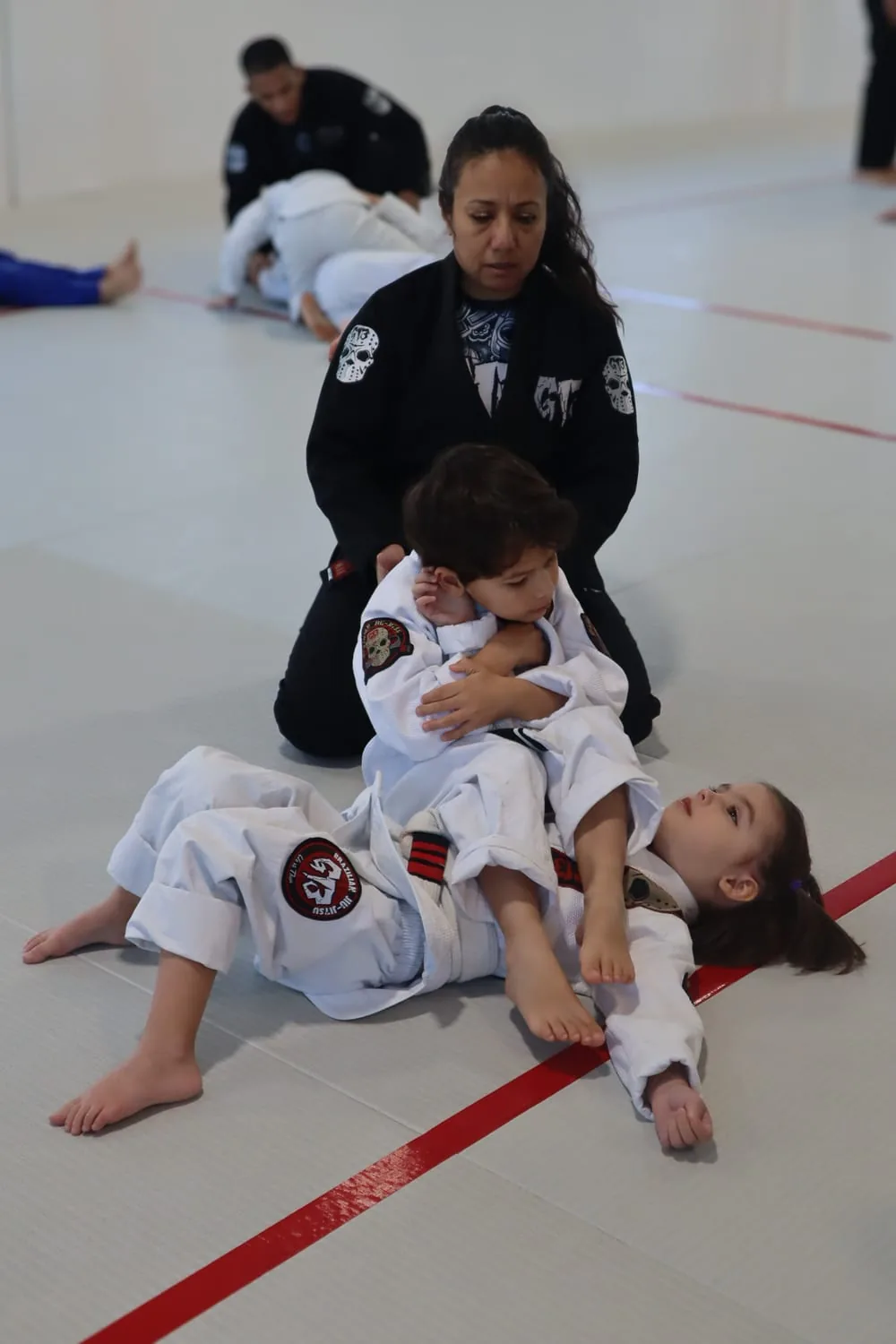
Most parents arrive here for one of three reasons: their kid has too much energy, their kid has too little confidence, or something happened at school. All three are good reasons, and the sport handles them differently than you might expect.
What a class actually looks like
We split by age, because a five year old and a twelve year old need completely different rooms.
Little Kids, ages 4 to 7. Heavy on games that are secretly technique: tag variations that teach base and movement, tug of war that teaches grip, crawling races that teach how to get up off the ground. They are learning to follow instruction from an adult who is not their parent, and they are learning that bodies bump into each other and it is fine. Real technique is in there, wrapped in something a six year old will do willingly for forty-five minutes.
Youth, ages 8 to 13. This is recognizably jiu-jitsu. Warm-up, technique broken into steps, drilling with a partner, and live training with rules appropriate to the age. They start keeping track of their own progress around here, which is the point where it stops being an activity you drive them to and starts being theirs.
At 14 they move into the adult classes. That transition surprises parents, and it is one of the most valuable things about the sport: a fifteen year old learning to hold their own in a room of adults who treat them as a training partner is a different kid by graduation.
How the belts work, and what to ask any gym
Kids have their own belt system, separate from the adult one, with stripes along the way. The thing to understand is that there is no fixed calendar. A belt is a statement about what the kid can do, not about how many months have passed or how many payments cleared.
Ask any gym you are considering what a stripe requires. If the answer is attendance and a testing fee, you have learned something. If the answer involves specific skills the kid has to show, you have learned something better.
The honest answer about bullying
Jiu-jitsu is better suited to this than almost anything else, for a reason that has nothing to do with fighting back. It is the only martial art where a kid can practice being physically overwhelmed, hundreds of times, in a controlled room, and learn that the panic passes and they can work their way out.
That is the actual mechanism. A kid who has been pinned by somebody bigger twice a week for a year does not escalate in a hallway, because the situation is no longer novel and their heart rate does not spike. Most of them never use a technique. The posture changes first, and posture is what most bullying selects for.
What I will not tell you is that it fixes a serious situation at school on its own. If something is happening to your kid right now, the gym is one part of a response that also involves the school. Anybody who promises you more than that is selling.
What changes at home
- Sleep. This is the one parents mention first, usually within two weeks.
- Losing gets less dramatic. Tapping is losing, several times per class, with no consequence attached. Kids who train stop treating a bad grade or a lost game as an identity event.
- Screens compete worse. A kid who is looking forward to Tuesday is a kid who negotiates less about Sunday.
- They get bored of it in month two. Every kid does. It is worth knowing in advance that the dip is normal and that pushing through it is where the actual benefit lives.
The practical questions
Kids classes run in the late afternoon, Little Kids first and Youth after, Monday through Thursday. The full grid is on the schedule section of the home page.
Kids membership is $125 a month. If more than one person in the house trains, the family plan covers the first two for $249 and adds $99 for each person after that, which is usually how it goes: one kid starts, and three months later a parent is on the mat too. The one-time registration covers the first uniform, so you are not buying gear before you know it will stick.
We are at Unit C5, 13790 E. I-25 Frontage Rd, Longmont, CO 80504, in the Lyons 66 Commercial Center, on the I-25 frontage road. Parents watch from inside, not through a window, and there is free parking directly outside.
Start with one class
The first class is free, and the only thing your kid needs is a t-shirt, shorts with no zippers or pockets, and trimmed nails. Book a time here, or come watch a class first without bringing them, which plenty of parents do and which I would recommend.